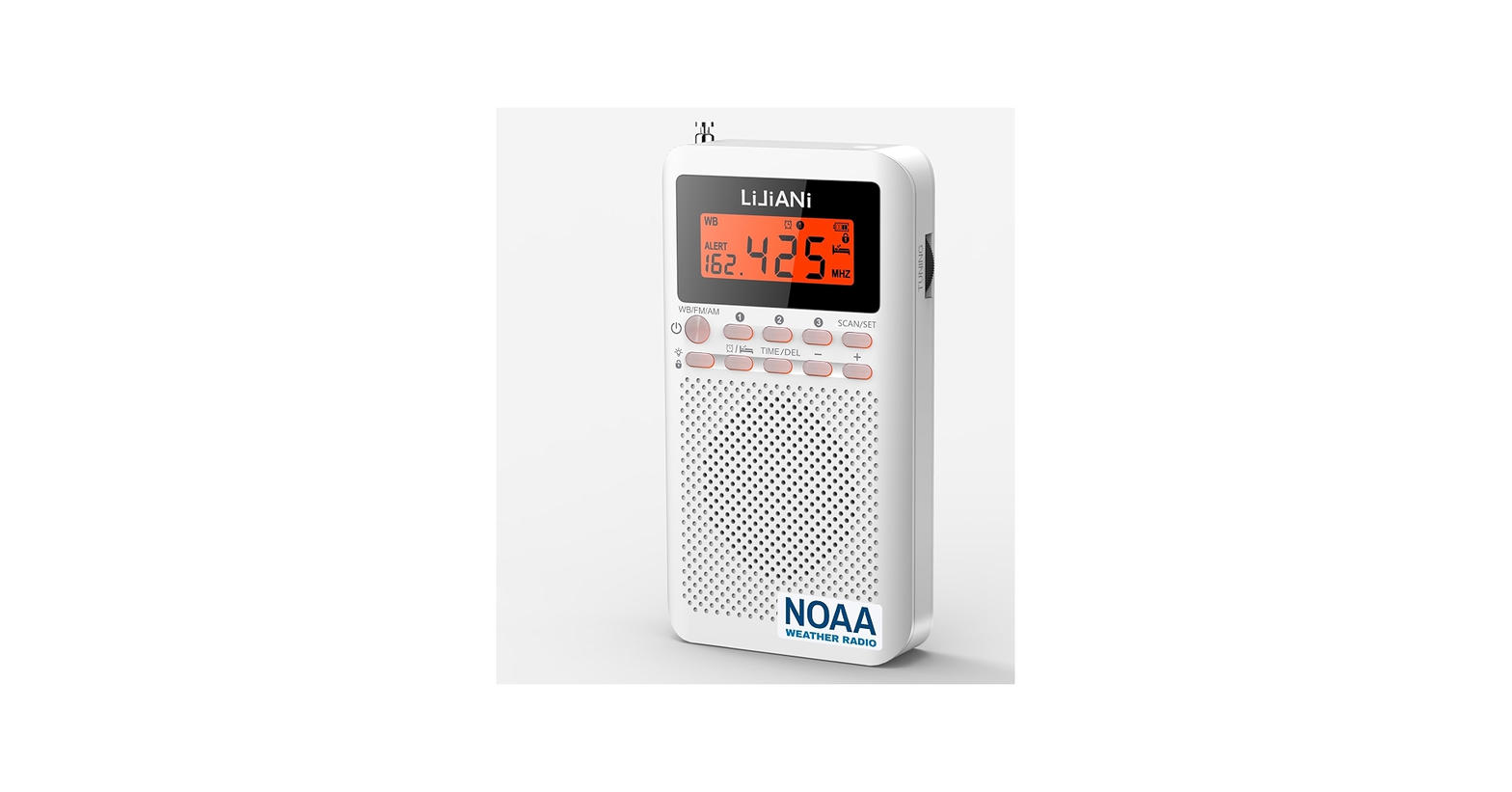
TSUNADO Alert Radio
Central to the system is a radio receiver that receives the alert activation from a local radio station or satellite channel and delivers the message through an internal speaker.
The TSUNADO Alert Radio is automatically turned on as part of the activation sequence. Once the alert message has been delivered by the on-air announcer, the radio receiver turns the speaker off, conserving power for subsequent alerts.
Key Features
- Loud internal alarm (~85 dB) — same loudness as a smoke alarm; wakes people from sleep in another room
- Battery powered with power-saving design — up to 5 days of operation delivering ~40 minutes of messaging per day
- Can also be used as a normal radio when plugged into mains
- Geographic targeting via region code or optional GPS module (take it with you in NZ)
- Text message display on screen
- Support for satellite delivery in remote areas (small adaptor for dish)
- Can interface with devices for people with disabilities (deafness, blindness)
- Multiple alert levels: Possible, Probable, Certain
- Portable — unplug and take with you when evacuating
Normal radios left on will deplete batteries quickly. The TSUNADO design keeps the radio mostly off until an alert is received.
Why Radio + Satellite?
Cellular networks and the internet are frequently the first systems to fail or overload in a major disaster. Broadcast radio has repeatedly proven far more resilient.
See the white papers for detailed comparisons.